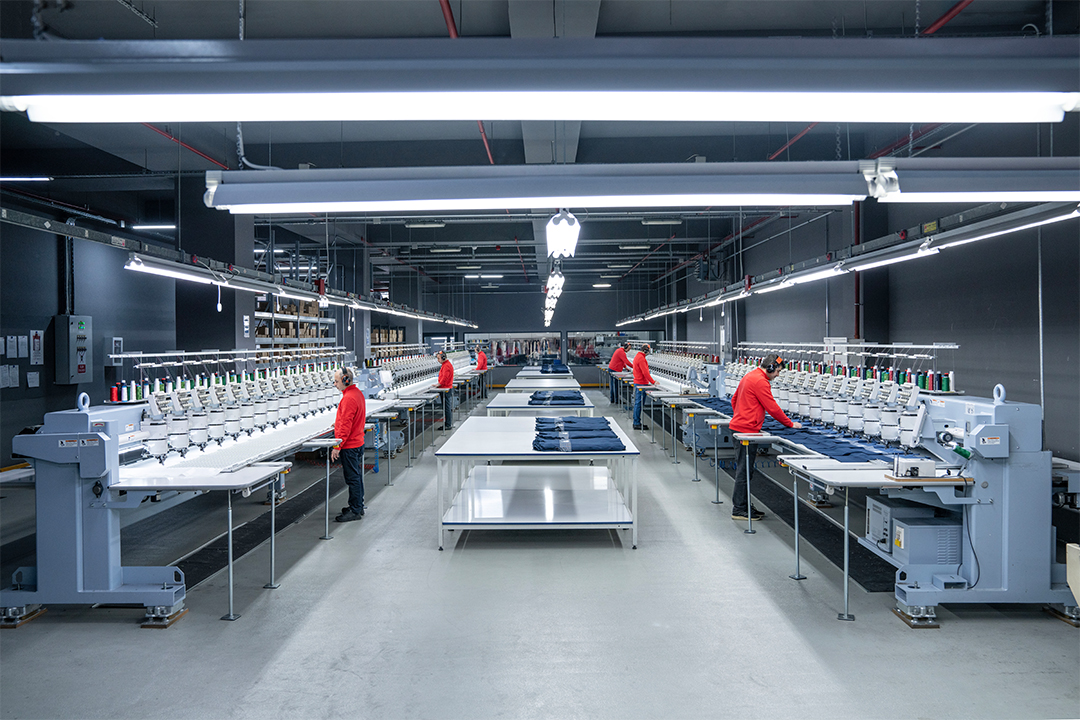
The apparel industry operates through a complex network of fabric suppliers, manufacturers, product development teams, and logistics partners. For fashion brands, coordinating these different stages can be challenging, particularly when managing product quality, production schedules, and supply chain visibility.
Vertical integration in apparel manufacturing offers an alternative approach by bringing multiple stages of the production process under a coordinated business structure.
Instead of relying on separate suppliers for every manufacturing activity, vertically integrated apparel manufacturers can manage connected processes, from fabric development and product design to garment production.
For fashion brands seeking greater control over their sourcing strategies, understanding how vertical integration works can help them evaluate manufacturing partnerships and make more informed supply chain decisions.
What Does Vertical Integration Mean in the Apparel Industry?
Vertical integration in the apparel industry refers to a business model in which a company manages or controls multiple stages of the textile and garment production value chain.
In conventional apparel supply chains, fabric manufacturing, product development, garment assembly, and finishing processes may be handled by different suppliers. Each business operates independently, requiring coordination between multiple organizations.
A vertically integrated apparel manufacturer, by comparison, brings several of these activities within the same company or a closely connected group of businesses.
The scope of integration varies between manufacturers. Some companies operate their own textile mills and garment production facilities, while others combine fabric development, design, sampling, and manufacturing services.
The purpose of vertical integration is not necessarily to eliminate external suppliers. Instead, it is to improve coordination and control across interconnected production activities.
Backward Integration in Apparel Manufacturing
Backward integration occurs when a company expands its operations into earlier stages of its supply chain.
For example, a garment manufacturer may integrate fabric development or textile production into its business structure rather than sourcing all materials from independent suppliers.
In the apparel industry, backward integration can provide greater visibility into material availability, fabric specifications, and production planning.
It also helps manufacturers coordinate textile development with the technical requirements of finished garments.
Forward Integration in the Apparel Supply Chain
Forward integration involves expanding into activities that occur later in the value chain, such as distribution, wholesale operations, or retail.
While backward integration focuses on upstream production activities, forward integration brings a business closer to the final market.
Not every vertically integrated apparel manufacturer participates in both forms of integration. The model depends on the company's capabilities, business strategy, and position within the supply chain.
How Does Vertical Integration Work in Apparel Manufacturing?
A vertically integrated apparel manufacturing model connects several production activities that might otherwise be managed by independent suppliers.
Although the exact structure differs between manufacturers, the following stages illustrate how integrated apparel production can operate.
1. Fabric Development and Textile Production
Fabric development plays an important role in determining the appearance, performance, durability, and functionality of a garment.
When textile development and garment manufacturing operate within an integrated structure, technical teams can coordinate fabric specifications with product requirements earlier in the development process.
This improves communication between textile specialists, designers, and garment production teams.
For fashion brands developing premium clothing, sportswear, or performance apparel, this coordination can be particularly relevant when working with specific material properties and technical requirements.
2. Design and Product Development
Product development translates a brand's creative direction into specifications suitable for manufacturing.
This stage may include technical design, fabric selection, pattern development, construction methods, and feasibility assessments.
Within an integrated manufacturing structure, design and production teams can collaborate throughout development rather than working through separate supplier relationships.
This enables production considerations to be addressed alongside product design decisions.
3. Sampling and Prototyping
Sampling allows brands to assess a garment before proceeding with larger-scale production.
During this stage, teams may evaluate fit, construction, fabric behavior, and finishing details.
Coordination between sampling and manufacturing functions can support clearer technical communication and more consistent interpretation of approved product specifications.
4. Printing, Embroidery, and Garment Manufacturing
Garment manufacturing involves transforming approved materials and designs into finished products.
Depending on the product, this may include cutting, sewing, printing, embroidery, finishing, and inspection.
When these activities operate within an integrated structure, manufacturers can coordinate production requirements across departments more directly.
This can be valuable for garments involving multiple construction or decorative processes.
5. Quality Control and Production Coordination
Quality control is an essential part of apparel manufacturing, regardless of whether production is integrated or outsourced.
In a vertically integrated structure, connected teams can share technical specifications, identify production issues, and coordinate corrective actions across multiple manufacturing stages.
The effectiveness of this approach depends on the manufacturer's quality management systems, operational processes, and communication practices.
Key Benefits of Vertical Integration for Fashion Brands
For apparel brands, vertical integration is relevant because it can influence how manufacturing relationships are managed.
Rather than focusing solely on the number of services provided by a manufacturer, brands should consider how connected production activities contribute to their operational requirements.
Improved Quality Control
Product consistency is particularly important for premium fashion, sportswear, and performance apparel brands.
When fabric development, product development, and garment manufacturing are closely coordinated, teams can identify potential quality issues at earlier stages.
Shared technical specifications and communication channels help different departments work toward consistent production requirements.
Better Production Coordination and Lead Time Management
Apparel production often involves dependencies between fabric availability, sampling approval, manufacturing schedules, and finishing activities.
When these processes are managed by separate suppliers, brands or intermediaries may need to coordinate multiple production schedules.
Vertical integration reduces some of these coordination requirements by connecting related activities within a common operational structure.
This helps manufacturers manage dependencies and respond to production changes more effectively.
Greater Supply Chain Visibility
Supply chain visibility allows fashion brands to understand where and how their products are manufactured.
An integrated production structure makes it easier to coordinate information between textile development, garment production, and related manufacturing activities.
This can support traceability initiatives, particularly when combined with effective recordkeeping and material tracking systems.
For brands navigating evolving sustainability expectations, access to reliable production information is increasingly important.
More Efficient Product Development
Developing apparel often requires collaboration between creative, technical, and manufacturing teams.
An integrated manufacturing partner allows these teams to work more closely throughout the development process.
This collaboration helps address technical challenges before production begins and supports alignment between design expectations and manufacturing capabilities.
Better Cost and Risk Management
Working with multiple independent suppliers creates additional coordination requirements.
These may involve communicating specifications, managing production changes, tracking materials, and resolving manufacturing issues between separate organizations.
Vertical integration simplifies certain aspects of supplier coordination by consolidating related production activities.
However, integrated manufacturing is not necessarily less expensive in every situation.
Brands should assess total sourcing costs, flexibility, production capabilities, and operational risks rather than assuming that one manufacturing model will always provide the lowest price.
Vertically Integrated vs. Non-Integrated Apparel Manufacturing
Understanding the differences between integrated and non-integrated manufacturing models can help fashion brands select an appropriate sourcing strategy.
| Comparison Area | Vertically Integrated Manufacturing | Non-Integrated Manufacturing |
|---|---|---|
| Production structure | Multiple connected stages managed within one business structure | Different stages handled by independent suppliers |
| Fabric development | May be integrated with garment manufacturing | Commonly sourced from external textile suppliers |
| Communication | Coordination across connected teams | Communication across separate organizations |
| Quality oversight | Potential for coordinated oversight across production stages | Requires quality management across multiple suppliers |
| Production planning | May simplify coordination between connected processes | Depends on the schedules of individual suppliers |
| Supplier flexibility | Depends on the integrated manufacturer's capabilities | May provide greater access to specialized suppliers |
| Traceability | Can support connected production records | Requires information sharing across supplier networks |
Neither model is universally superior.
Non-integrated manufacturing can offer access to specialized suppliers and flexibility when selecting production partners.
Vertical integration, meanwhile, appeals to brands seeking coordinated manufacturing services, closer technical collaboration, and simplified supplier management.
The right choice depends on product requirements, production volumes, technical complexity, and sourcing priorities.
Why Does Vertical Integration Matter for Sustainable Apparel Production?
Sustainability has become an important consideration in apparel sourcing and manufacturing.
Fashion brands increasingly need reliable information about materials, production processes, environmental practices, and supply chain operations.
Vertical integration can support certain aspects of responsible manufacturing by facilitating coordination across connected production stages.
Supply Chain Transparency and Material Traceability
When textile and garment manufacturing activities are closely connected, companies find it easier to coordinate information about material specifications and production processes.
This can support efforts to improve traceability and maintain consistent manufacturing records.
As Digital Product Passport (DPP) requirements take shape under EU regulation, this kind of connected production data is becoming increasingly valuable for brands selling into European markets.
Responsible Production and Certification
Sustainability standards and certification systems can help brands evaluate specific aspects of manufacturing practices.
Depending on their scope, these may address areas such as material content, chemical management, environmental management, or production processes.
For example, frameworks and standards associated with organizations such as bluesign®, GOTS, and GRS address different aspects of responsible textile and apparel production.
It is important to distinguish between a company's participation in a certification system, the certification status of individual facilities, and the certification of specific products.
Vertical integration does not automatically make apparel manufacturing sustainable.
Environmental and social performance should be evaluated through actual operating practices, verified standards, transparent reporting, and measurable outcomes.
Vertical Integration and Nearshoring for European Brands
For brands selling into the UK and Europe, vertical integration is often considered alongside nearshoring: moving production closer to the end market.
Combining the two means fabric development, sampling and garment production can be coordinated within one partner located close to European distribution centres. This supports faster responses to repeat orders, smaller and more frequent production runs, and closer day-to-day collaboration between brand and manufacturer teams.
Türkiye and Serbia are established apparel production locations serving European markets, with road and sea connections to major European destinations.
How Aster Textile Approaches Vertical Integration
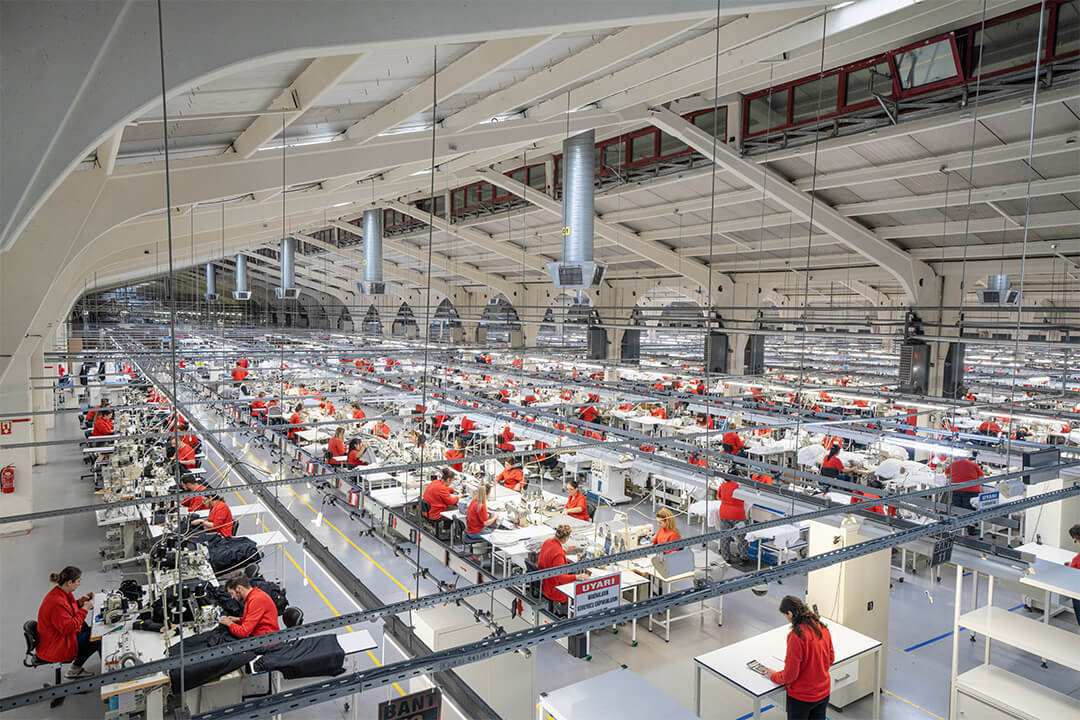
With roots dating back to 1987, Aster Textile was established in 1993 as an Istanbul-based apparel manufacturer serving premium fashion, luxury, and performance apparel brands.
The company's manufacturing model brings together several connected activities, including design, product development, sampling, printing, embroidery, and garment manufacturing.
sAn important part of this structure is its relationship with Artesa Fabrics, its sister fabric brand, which supports the textile side of its integrated manufacturing approach. Setra Trim, the group's trims company, extends the same structure to trims and accessories.
By connecting fabric-related capabilities with apparel development and production, Aster Textile offers fashion brands a coordinated manufacturing partnership across multiple stages of the value chain.
The company has manufacturing operations in Türkiye (Istanbul, Kırklareli and Tokat) and Serbia, and has recently expanded into Egypt with a new facility in the Alexandria Free Zone. Its business development presence in Istanbul and London supports relationships with brands in European and international markets.
Aster Textile's approach also places emphasis on responsible manufacturing. The company is a bluesign® System Partner, the first integrated facility in Türkiye to hold this status, and holds GOTS, GRS, RCS and OEKO-TEX® certifications. It is also a member of Better Cotton (BCI).
83% of the materials Aster uses are certified, its electricity consumption is 100% covered by I-REC certificates, and 4 MW of installed solar capacity supports its operations. The company's Higg FEM score is 71.7.
Aster has also built Digital Product Passport (DPP) infrastructure, extending the traceability advantages of integrated production to product-level data, and runs circular economy initiatives such as the 2ND Life Movement and a pilot of Resortecs SmartStitch™ technology, which makes garments easier to disassemble for recycling.
For apparel brands evaluating production partners, this combination of fabric capabilities, product development expertise, and multi-country manufacturing gives them a single partner across fabric, development and production, located close to European markets.
Rather than treating fabric development and garment production as completely separate activities, the integrated approach supports communication and coordination across related processes.
How to Choose a Vertically Integrated Apparel Manufacturer
Selecting a manufacturing partner involves more than determining whether a company describes itself as vertically integrated.
Fashion brands should assess the specific processes a manufacturer manages and whether those capabilities align with their product requirements.
The following questions can help guide the evaluation.
Which Manufacturing Processes Are Integrated?
Determine whether the manufacturer manages fabric development, textile production, sampling, garment manufacturing, and finishing activities.
Not every integrated manufacturer provides the same services, and some production stages may still involve external partners.
Does the Manufacturer Have Relevant Product Expertise?
Manufacturing requirements can vary significantly between luxury clothing, everyday apparel, technical sportswear, and performance garments.
Brands should evaluate whether a potential partner has experience with comparable materials, construction methods, and quality expectations.
How Are Quality and Compliance Managed?
Ask about quality assurance procedures, manufacturing standards, documentation, and relevant certification coverage.
A manufacturer's integrated structure should be supported by appropriate management systems and operational processes.
Where Are the Manufacturing Facilities Located?
Production location can affect logistics, communication, sourcing flexibility, and market access.
Brands serving European markets may consider manufacturers operating in Türkiye or other nearby production locations as part of a nearshoring strategy.
How Does the Manufacturer Support Product Development?
For brands developing technically demanding garments, collaboration during the early stages of product development can be particularly valuable.
Evaluate how the manufacturer coordinates design, material selection, sampling, and production planning.
Ultimately, selecting a vertically integrated apparel manufacturer requires balancing technical capabilities, quality expectations, manufacturing locations, communication, and long-term partnership potential.
Conclusion
Vertical integration in the apparel industry brings multiple manufacturing activities into a coordinated business structure.
By connecting functions such as fabric development, product design, sampling, and garment manufacturing, vertically integrated manufacturers enable closer collaboration and more coordinated production management.
For fashion brands, the potential benefits include improved supply chain visibility, stronger communication between production stages, and more integrated product development processes.
However, vertical integration should be evaluated alongside manufacturing expertise, quality systems, sustainability practices, and operational capabilities.
With its integrated approach to fabric-related capabilities and garment production, Aster Textile supports brands across interconnected stages of the production process.
Explore Aster Textile's manufacturing capabilities or contact our team to learn more about our approach to apparel production.
Frequently Asked Questions
What is vertical integration in apparel manufacturing?
Vertical integration in apparel manufacturing is a business model in which a company manages multiple connected stages of the clothing production process, such as fabric development, product design, sampling, and garment manufacturing.
What are the main advantages of vertical integration in the apparel industry?
Potential advantages include improved production coordination, closer collaboration between technical teams, greater supply chain visibility, and simplified management of connected manufacturing activities. Actual results depend on the manufacturer's capabilities and operating processes.
What is the difference between vertical and horizontal integration in the textile industry?
Vertical integration connects different stages of the production value chain, such as textile and garment manufacturing. Horizontal integration involves combining or expanding operations at the same stage of an industry, such as two businesses specializing in similar manufacturing activities.
Does vertical integration make apparel manufacturing more sustainable?
Vertical integration can support traceability and coordinated production oversight, but it does not automatically guarantee sustainability. Environmental and social performance depends on actual manufacturing practices, management systems, material choices, and independently verifiable standards.
Why do fashion brands work with vertically integrated manufacturers?
Fashion brands may choose vertically integrated manufacturers to simplify supplier coordination, improve communication between production stages, access connected product development services, and gain greater visibility into manufacturing processes.