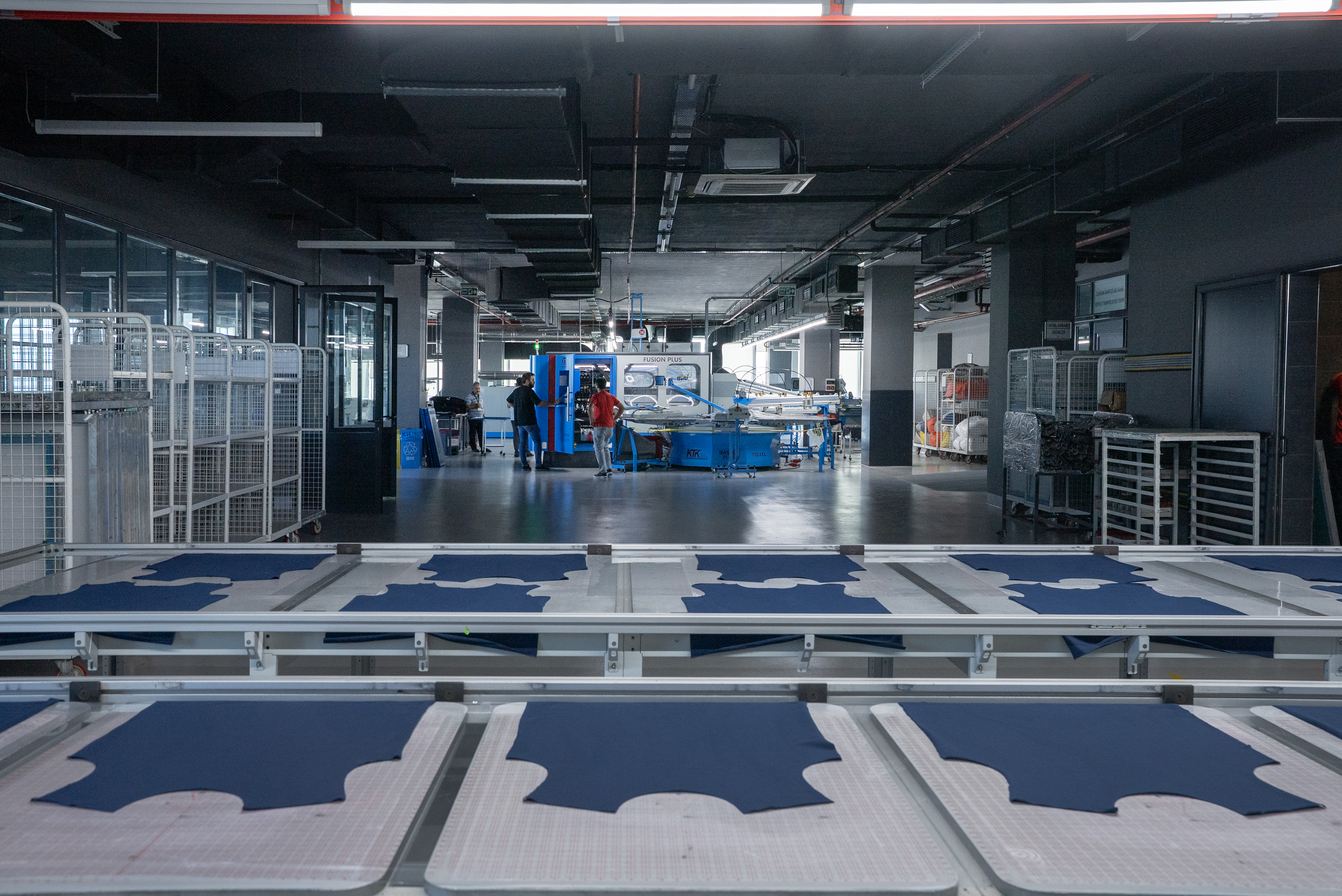
Sustainability has become an important consideration for fashion brands evaluating their textile and apparel supply chains. Beyond selecting materials and finished products, companies increasingly need to understand how textiles are manufactured, which chemicals are used, and how environmental and workplace risks are managed.
This is where bluesign certification in textile manufacturing becomes relevant.
bluesign is an independent system that evaluates textile production processes, with a particular focus on chemical management, resource efficiency, environmental protection, and worker safety.
For apparel brands, understanding bluesign can help clarify how responsible manufacturing practices are assessed and how suppliers demonstrate their commitment to continuous improvement.
However, it is important to distinguish between a bluesign System Partner and a product carrying a certification mark. These terms describe different aspects of the system and should not be used interchangeably.
What Is bluesign Certification in Textile Manufacturing?
bluesign is a system designed to support safer and more responsible production throughout the textile value chain.
Rather than focusing exclusively on testing finished products, the system evaluates the materials, chemicals, and manufacturing processes involved in textile production.
Its approach addresses potential risks at the beginning of production, including those associated with chemical inputs, resource consumption, and environmental emissions.
bluesign works with different participants across the industry, including chemical suppliers, textile manufacturers, apparel producers, and brands.
These organizations can participate in the bluesign System, undergo assessments, and work toward improving their manufacturing practices.
In everyday industry language, the term "bluesign certification" is often used broadly. However, bluesign System Partnership and product-level certification are different concepts.
A System Partner is a company participating in the bluesign framework, while eligible products or materials may carry specific certification marks when the applicable requirements are met.
How Does the bluesign System Work?
The bluesign System takes a process-oriented approach to textile manufacturing.
Instead of relying only on the properties of a finished fabric or garment, it considers what happens during manufacturing and how potential environmental and safety risks are managed.
Input Stream Management
One of the central principles of the bluesign System is input stream management.
This approach focuses on evaluating chemical products before they enter textile manufacturing processes.
By assessing chemical inputs at an early stage, the system aims to identify and manage potential risks before those substances are used in production.
This is particularly relevant to textile processes that may involve dyes, auxiliaries, finishing chemicals, and other manufacturing inputs.
Managing chemical risks at the source can support more systematic production oversight than relying exclusively on testing finished materials.
Assessment of Manufacturing Processes
bluesign also evaluates relevant manufacturing processes and operating practices.
Depending on the organization and assessment scope, this includes areas such as chemical handling, resource management, environmental controls, and occupational health and safety.
These assessments help identify areas where manufacturing processes can be strengthened.
Participation in the system should therefore be understood as part of an ongoing management and improvement framework rather than a claim that a manufacturing operation has no environmental impact.
Continuous Improvement
Responsible textile manufacturing requires ongoing evaluation.
The bluesign System supports participating companies in identifying performance gaps, developing improvement plans, and reviewing relevant operational practices.
This approach recognizes that manufacturing processes, chemical technologies, regulatory requirements, and sustainability expectations change over time.
Continuous improvement is therefore an important part of the system.
What Does It Mean to Be a bluesign System Partner?
A bluesign System Partner is an organization that participates in the bluesign System and its assessment and improvement framework.
System Partners may include textile manufacturers, chemical suppliers, apparel companies, and brands.
The partnership reflects a company's participation in a structured approach to evaluating and improving relevant production or supply chain practices.
For fashion brands assessing manufacturing partners, this status can provide a useful starting point for discussing chemical management, environmental performance, and operational oversight.
However, System Partner status should not be interpreted as confirmation that every material or product manufactured by the company is certified.
The partnership applies at the organizational level, while product-related certification claims have their own requirements and scope.
What Is the Difference Between bluesign System Partner and bluepass Certification?
Understanding the distinction between organizational participation and product-related certification is essential when evaluating textile suppliers.
In April 2026, bluesign introduced bluepass as its unified certification mark, replacing the previous bluesign® APPROVED and bluesign® PRODUCT designations through a transition process.
The terminology has changed, but the distinction between a System Partner and an eligible certified product remains important.
| Term | What It Means |
|---|---|
| bluesign System Partner | A company participating in the bluesign assessment and improvement system |
| bluepass Consumer Product | A certification mark for eligible finished consumer products |
| bluepass Article | A certification mark for eligible materials and components, such as fabrics, accessories, and trims |
| bluepass Chemical Product | A certification mark for eligible chemical products |
| bluesign® APPROVED / bluesign® PRODUCT | Earlier designations being transitioned to bluepass |
The bluepass marks communicate that the relevant production processes meet applicable bluesign Criteria.
A product-level claim must be evaluated according to the requirements and certification scope associated with that specific product or component.
This distinction helps sourcing professionals avoid assuming that a supplier's participation in the bluesign System automatically certifies everything it produces.
Why Is bluesign Important for Textile Manufacturers?
Textile manufacturing involves interconnected processes with potential impacts on environmental performance, chemical safety, workplace conditions, and resource use.
A structured assessment system can help manufacturers identify risks and organize improvement efforts.
Chemical Management and Product Stewardship
Chemical management is particularly relevant in textile production because chemicals may be used during dyeing, printing, finishing, and other processes.
The bluesign approach emphasizes evaluating chemical inputs and managing potential risks before they reach later stages of production.
For manufacturers, this provides a framework for considering chemical suitability, handling practices, and production controls.
Resource Efficiency
Textile production can require substantial quantities of water and energy, depending on the manufacturing process.
Resource efficiency therefore plays an important role in evaluating operational performance.
The bluesign framework addresses resource productivity and encourages attention to how resources are managed.
However, participation in the system does not by itself establish a specific percentage reduction in water use, energy consumption, or waste.
Such claims require measurable, verified data.
Environmental Protection
Manufacturing activities can create wastewater, air emissions, and solid waste.
Environmental management involves identifying these impacts and implementing relevant controls.
Within the bluesign framework, environmental protection is assessed as part of a broader approach to responsible textile manufacturing.
Occupational Health and Safety
Responsible production also includes protecting the people involved in manufacturing.
Chemical handling, workplace exposure, and appropriate safety procedures are relevant considerations in textile production environments.
The bluesign System incorporates occupational health and safety into its assessment framework, connecting environmental responsibility with the management of workplace risks.
Why Does bluesign Matter for Fashion and Apparel Brands?
For fashion brands, sourcing decisions increasingly involve more than material prices, production capacity, and delivery schedules.
Brands may also need to evaluate how manufacturing partners manage chemical risks, document production practices, and support sustainability-related requirements.
Supporting Supplier Evaluation
A manufacturer's participation in an independent assessment framework can provide useful information during supplier evaluation.
Brands can use this information alongside other due diligence activities, quality assessments, and technical requirements.
System Partnership should be one input in a broader supplier selection process, not the sole basis for approving a manufacturing partner.
Improving Supply Chain Transparency
Transparency depends on access to reliable information about manufacturing operations and materials.
Standards-based assessment frameworks can support more structured discussions about how production activities are managed.
However, effective supply chain transparency also requires documentation, traceability systems, and cooperation between relevant suppliers.
Supporting Responsible Sourcing Strategies
Fashion brands may have internal sourcing requirements relating to chemical management, environmental practices, or production oversight.
Understanding bluesign terminology and certification scope can help sourcing teams ask more informed questions.
For example, a brand may need to determine whether a potential manufacturer is a System Partner, whether a particular fabric has bluepass certification, or whether a finished garment qualifies for a specific product-level claim.
These are related but separate considerations.
How Does bluesign Differ from Other Textile Certifications?
The textile industry uses several sustainability-related standards and certification systems.
Although these initiatives may address overlapping concerns, they do not necessarily evaluate the same aspects of production.
For example, bluesign places significant emphasis on chemical inputs and manufacturing processes.
The Global Organic Textile Standard (GOTS) focuses on textiles made with organic fibres and includes relevant environmental and social processing requirements.
The Global Recycled Standard (GRS) addresses recycled content, chain of custody, and additional processing requirements.
These systems should not be treated as interchangeable.
When comparing manufacturers, brands should consider which standard applies to the materials, facilities, processes, or products relevant to their sourcing requirements.
The name of a certification alone does not provide a complete picture without understanding its scope.
How Aster Textile Approaches Responsible Apparel Manufacturing
With roots dating back to 1987, Aster Textile was established in 1993 as an Istanbul-based, vertically integrated apparel manufacturer working with premium fashion, luxury, and performance apparel brands.
Its manufacturing approach connects activities such as design, product development, sampling, printing, embroidery, and garment production.
Through its sister fabric brand, Artesa Fabrics, the company also maintains a connection between textile-related capabilities and apparel manufacturing.
Aster Textile is a bluesign® System Partner and was the first integrated facility in Türkiye to achieve this status, reflecting its participation in a recognized framework for responsible textile manufacturing practices.
For fashion brands evaluating sourcing partners, this status is relevant to discussions about chemical management, environmental practices, and manufacturing oversight.
Aster Textile's integrated production model allows chemical management and process controls to be coordinated across fabric-related capabilities, garment development and manufacturing.
Alongside bluesign, Aster Textile holds GOTS, GRS, RCS and OEKO-TEX® certifications. 83% of the materials it uses are certified, its electricity consumption is 100% covered by I-REC certificates, and its Higg FEM score is 71.7.
For brands that need product-level bluepass certification for a specific fabric or garment, Aster Textile's team can confirm the certification status of each article.
How Can Brands Evaluate a Manufacturer's bluesign Credentials?
When assessing a textile or apparel manufacturer, sourcing teams should look beyond general sustainability statements.
The following questions can help support a more informed evaluation.
Is the Manufacturer a bluesign System Partner?
Ask whether the company participates in the bluesign System and which entity or operation the stated status relates to.
Are Specific Materials or Products Certified?
Determine whether the fabric, component, or finished product relevant to your sourcing requirements carries an applicable bluepass certification.
Do not assume that organizational partnership automatically extends to all products.
What Is the Scope of the Certification?
A certification claim should identify what has been assessed and what it covers.
For example, a certified fabric component and a certified finished garment are not identical claims.
How Are Environmental and Chemical Management Practices Documented?
Request information that is relevant to your sourcing requirements, including appropriate supporting documentation, verification, and operational controls.
How Does the Manufacturer Support Ongoing Improvement?
Discuss how the manufacturing partner reviews its processes, responds to identified issues, and manages changes in relevant requirements.
Together, these considerations can help brands evaluate suppliers using evidence rather than broad sustainability claims.
Conclusion
bluesign plays an important role in promoting structured approaches to chemical management, resource efficiency, environmental protection, and worker safety within textile manufacturing.
For fashion brands, understanding the bluesign System can support more informed sourcing decisions and clearer discussions with potential manufacturing partners.
It is equally important to distinguish between bluesign System Partnership and specific bluepass product certification.
As a vertically integrated manufacturer and bluesign® System Partner, Aster Textile brings this framework into its manufacturing partnerships with international apparel brands.
Explore Aster Textile's manufacturing capabilities and approach to responsible production.
Frequently Asked Questions
What is bluesign certification in textiles?
bluesign is an independent assessment system addressing chemical inputs, manufacturing practices, environmental management, and worker safety in the textile value chain. Product-related certification is communicated through the bluepass certification marks.
What does bluesign System Partner mean?
A bluesign System Partner is an organization participating in the bluesign System's assessment and improvement framework. The designation does not mean that all products made by the company are individually certified.
What is bluepass certification?
bluepass is the certification mark introduced by bluesign in 2026 for qualifying consumer products, textile articles, and chemical products. It replaces the earlier bluesign® APPROVED and bluesign® PRODUCT designations through a transition process.
Is bluesign the same as OEKO-TEX?
No. bluesign and OEKO-TEX represent different systems and certification programmes. The specific scope depends on the relevant OEKO-TEX standard and the bluesign assessment or certification being considered.
Does bluesign guarantee that a garment is sustainable?
No single certification guarantees that a garment has no environmental or social impact. bluesign assesses defined production criteria, while broader sustainability performance depends on the complete product and supply chain.
Why do apparel brands look for bluesign System Partners?
Brands may consider bluesign System Partnership when evaluating manufacturers' approaches to chemical management, production oversight, resource efficiency, and continuous improvement.