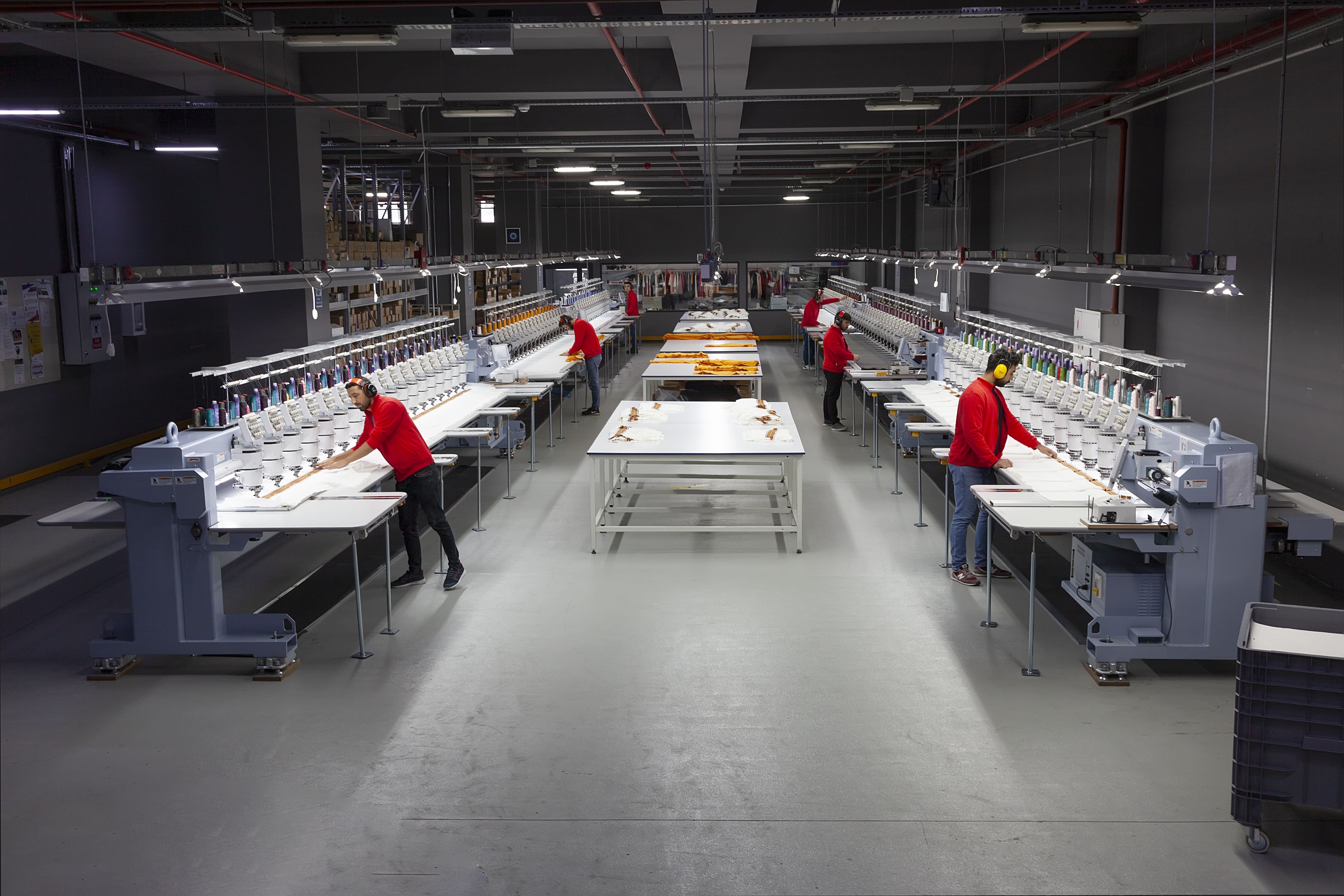
Choosing the right manufacturing location is an important decision for fashion brands seeking to balance product quality, production costs, delivery schedules, and supply chain reliability.
For brands sourcing apparel for European and international markets, clothing manufacturing in Turkey vs Egypt is an increasingly relevant comparison.
Both countries have established textile and apparel industries, access to international markets, and manufacturing capabilities that serve different sourcing requirements.
Turkey is frequently considered for its established textile supply chain, proximity to European markets, and experience with fashion-oriented manufacturing. Egypt attracts interest for its potential cost competitiveness, textile production capabilities, and trade arrangements with major markets.
However, the decision should not be based on manufacturing costs or geography alone.
Understanding how Turkey and Egypt compare across production capabilities, logistics, trade arrangements, and supplier management can help fashion brands develop more effective sourcing strategies.
Overview of Apparel Manufacturing in Turkey and Egypt
Turkey and Egypt both play important roles in international textile and apparel manufacturing.
Although they share certain advantages, their manufacturing environments and sourcing characteristics differ.
Apparel Manufacturing in Turkey
Turkey has an established textile and ready-to-wear manufacturing industry serving domestic and international markets.
Its manufacturing ecosystem includes fabric production, textile processing, garment manufacturing, product development, and finishing capabilities.
Over several decades, this ecosystem has developed the skills required for technically demanding garments, where both the fabric and the workmanship are technically demanding. On the material side, this includes working with structured wovens, technical and stretch knits, performance fabrics, bonded and laminated materials, and fabrics that need specific dyeing, washing or finishing treatments, as well as matching each fabric with the right lining, interlining and trims.
On the construction side, it covers multi-panel patterns, accurate grading across size ranges, taped and bonded seams, internal facings and pockets, and controlled pressing between production stages. Experienced pattern makers, technical teams and skilled machine operators are a central part of this capability, supported by a wide local supplier base for fabrics, linings, trims and accessories.
For European fashion brands, Turkey's geographic proximity supports communication, logistics planning, and collaboration with manufacturing partners.
The country also has a long-standing relationship with the European Union through the EU–Turkey Customs Union, which covers most industrial products.
Turkey is particularly relevant for brands seeking close collaboration during product development, technically demanding apparel manufacturing, and regional sourcing arrangements.
Apparel Manufacturing in Egypt
Egypt also has an established textile and garment manufacturing industry, supported by domestic textile production and international export activities.
The country's manufacturing sector includes cotton-related textiles, fabric manufacturing, garment assembly, and export-oriented production.
Much of Egypt's export apparel production has traditionally focused on high-volume cotton products. The sector is attracting new investment and broadening its capabilities, while the supporting supply chain for fabrics, trims and finishing processes continues to develop. For more complex garments, some materials and components may still need to be sourced from outside the country.
For international fashion brands, Egypt may offer opportunities to evaluate competitive manufacturing costs alongside access to European and United States markets.
Egypt's trade arrangements, including its Association Agreement with the European Union and the Qualified Industrial Zones (QIZ) programme for qualifying exports to the United States, can be relevant to sourcing decisions.
However, eligibility for preferential trade treatment depends on the applicable agreement, product, origin requirements, and documentation.
As with Turkey, manufacturing quality, technical expertise, production capacity, and delivery performance must be assessed at the supplier level.
Turkey vs Egypt Apparel Manufacturing: Key Differences
When comparing apparel manufacturing in Turkey and Egypt, fashion brands should consider several factors together rather than focusing on a single advantage.
| Comparison Factor | Turkey | Egypt |
|---|---|---|
| Textile and apparel industry | Established textile and garment manufacturing ecosystem | Established textile and garment industry with cotton-related capabilities |
| Production costs | Depend on labour, materials, energy, efficiency, and order requirements | May offer cost advantages for certain product categories and manufacturing arrangements |
| European market access | Geographic proximity and EU–Turkey Customs Union | Geographic access to Europe and preferential trade arrangements subject to applicable rules |
| US market access | Subject to applicable US import duties and trade rules | Qualifying products may benefit from QIZ duty-free access |
| Product development | Broad textile, design, and garment manufacturing capabilities, including experience with technically demanding garments | Capabilities vary by manufacturer and product category; supporting ecosystem for more complex garments still developing |
| Lead times | May benefit from proximity to European destinations | Depend on production location, transportation mode, capacity, and delivery destination |
| Manufacturing flexibility | Determined by supplier capabilities and order requirements | Determined by supplier capabilities and order requirements |
| Sustainability and compliance | Must be assessed at manufacturer, facility, and product level; established certification and traceability practices support ESPR and DPP readiness | Must be assessed at manufacturer, facility, and product level |
The comparison illustrates why sourcing decisions should be based on the needs of a particular product and business model.
Neither country is automatically the better choice for every apparel programme.
1. Manufacturing Costs: Is Turkey or Egypt More Cost-Effective?
Production cost is one of the main considerations when fashion brands compare garment manufacturing locations.
However, the cost of producing apparel depends on more than the country in which a factory operates.
Relevant factors include labour costs, material sourcing, energy, productivity, manufacturing complexity, order volume, and quality requirements.
Cost Considerations in Turkey
Manufacturers in Turkey operate within a developed textile and apparel production environment.
Access to textile suppliers and related manufacturing capabilities can create opportunities to coordinate different production activities.
For some brands, the ability to source fabric development and garment manufacturing services within a connected supply chain may reduce certain coordination requirements.
Nevertheless, the final manufacturing price depends on the product, technical specifications, production processes, and commercial terms.
For many sourcing programmes, Turkey's shorter transit times to Europe, integrated textile supply chain and lower coordination requirements can offset differences in labour costs when the total landed cost is considered.
Cost Considerations in Egypt
Egypt is frequently considered as a potential option for cost-competitive garment manufacturing.
Differences in labour costs and production economics may make certain manufacturing arrangements financially attractive.
However, lower labour costs do not necessarily translate into a lower final product cost.
Material availability, production efficiency, import requirements, freight, quality control, and financing conditions can all influence the total cost.
Why Total Landed Cost Matters
Fashion brands should evaluate the total landed cost rather than comparing factory prices alone.
This may include:
- Manufacturing and material costs
- International freight and transportation
- Customs duties and applicable taxes
- Quality assurance and inspection
- Inventory holding costs
- Supply chain coordination
- Potential delays and associated commercial risks
A lower factory price may not always deliver the best overall sourcing outcome.
The appropriate comparison is the total cost of obtaining products that meet the required specifications and delivery expectations.
Some factors are also difficult to capture in a price comparison. Traceability, sustainability performance and regulatory readiness carry real commercial value, particularly as the EU's Ecodesign for Sustainable Products Regulation (ESPR) introduces new obligations for apparel, including Digital Product Passport (DPP) requirements (see Section 5). In Turkey, many manufacturers already have established certification, traceability and sustainability systems in place, which can reduce the time and cost brands would otherwise spend building this documentation with their suppliers.
2. Production Lead Times and Speed to Market
Production lead times influence inventory planning, collection launches, and replenishment strategies.
For fashion brands, a manufacturing location's suitability depends on the relationship between production schedules, transportation time, and the required delivery date.
Lead Time Considerations in Turkey
Turkey's proximity to European markets can create logistical advantages for certain supply chains.
Depending on the production facility and destination, manufacturers may have access to road, sea, and air transportation options.
Geographic proximity may also facilitate in-person collaboration between European brands and their production partners.
However, manufacturing lead times still depend on fabric availability, product complexity, factory capacity, sampling approvals, and production planning.
Lead Time Considerations in Egypt
Egypt offers access to international shipping routes and serves brands across different export markets.
Actual delivery timelines depend on the manufacturing location, destination, transportation method, and prevailing logistics conditions.
For some sourcing programmes, Egypt may offer an appropriate balance between production requirements and delivery expectations.
Brands should request supplier-specific production schedules and shipping estimates rather than relying on general country comparisons.
Choosing Based on Delivery Requirements
Brands managing fast-changing collections or frequent replenishment may place greater emphasis on transportation flexibility and close supplier communication.
For predictable products with longer planning horizons, manufacturing cost and production capacity may carry more weight.
In both cases, dependable scheduling and communication are essential.
3. Product Quality and Manufacturing Capabilities
Manufacturing quality is a critical consideration for premium fashion, sportswear, performance apparel, and other technically demanding product categories.
However, product quality should not be assessed through country-level assumptions.
Textile and Apparel Capabilities in Turkey
Turkey has an established ecosystem of textile and garment manufacturers offering different levels of specialization.
Depending on the supplier, these may include fabric development, knitting, weaving, printing, embroidery, garment manufacturing, and finishing.
Such capabilities can be relevant for brands requiring collaboration between material development and garment production.
Turkish manufacturers have extensive experience in technically demanding garments, where quality depends on many details coming together: accurate patterns and grading, compatibility between fabric, lining and interfacing, seam strength, pressing and final finishing. Because fabric mills, printing and embroidery units, trim suppliers and garment factories often operate close to one another, technical issues can usually be resolved during development rather than after production has started.
This depth of craftsmanship, built over many years of supplying European fashion brands, is one reason Turkey is often considered for premium and technically demanding collections.
However, the availability of a particular process must be confirmed with the manufacturer.
Textile and Apparel Capabilities in Egypt
Egypt's textile industry includes cotton-related manufacturing and garment production capabilities.
Suppliers may specialize in different product categories, materials, or manufacturing methods.
The industry is in a growth phase, with new investment and an expanding range of manufacturers. As this development continues, brands sourcing more complex styles may wish to pay particular attention to the local availability of fabrics and trims, the experience of technical teams, and the time required for sampling and approvals.
For brands evaluating Egypt, the relevant questions concern the specific manufacturer's technical expertise, production processes, quality management, and ability to meet product specifications.
Quality Depends on the Manufacturer
A factory's location does not determine its product quality. However, the depth of the surrounding industry, including access to experienced technical staff, specialist suppliers and finishing processes, can influence how consistently a manufacturer delivers complex products.
Fashion brands should assess:
- Experience with comparable products
- Sampling and development capabilities
- Quality assurance processes
- Technical communication
- Relevant certifications and audits
- Production consistency
- Corrective action procedures
A manufacturer with the right expertise and controls may be more suitable than another supplier in a country perceived to have broader industry advantages.
4. Trade Agreements and International Market Access
Trade agreements can influence apparel sourcing decisions, particularly when brands supply multiple international markets.
Turkey and Egypt have different commercial relationships with the European Union and the United States.
Turkey and the European Union
Turkey participates in a Customs Union with the European Union covering most industrial products.
For apparel businesses, this arrangement is relevant when assessing the customs treatment of qualifying goods moving between Turkey and the EU.
However, brands should distinguish customs-union rules from preferential rules of origin and confirm the documentation applicable to their shipments.
The Customs Union does not mean that every shipment is exempt from all import formalities, taxes, or product requirements.
Egypt and the European Union
The EU–Egypt Association Agreement establishes preferential trade arrangements covering industrial goods.
Products may qualify for reduced or eliminated customs duties when the relevant rules of origin and documentation requirements are met.
For apparel brands, the applicable tariff treatment should be assessed using the product classification and the rules governing the intended shipment.
Egypt and the United States: The QIZ Programme
Egypt participates in the Qualified Industrial Zones programme, which provides a potential route for eligible goods to enter the United States duty-free.
The programme is subject to conditions, including specific production and input requirements.
It should not be assumed that all garments manufactured in Egypt automatically qualify for QIZ benefits.
Eligibility depends on the relevant facility, production arrangement, origin conditions, and required documentation.
What Should Brands Consider?
Trade preferences should be evaluated alongside commercial and operational requirements.
A sourcing strategy that provides a customs advantage may still involve additional costs or constraints elsewhere in the supply chain.
Brands should confirm applicable trade rules before making sourcing commitments.
5. Sustainability, Traceability, and Compliance
Fashion brands increasingly evaluate manufacturing partners based on environmental practices, worker safety, supply chain transparency, and regulatory readiness.
These considerations apply to apparel manufacturing in both Turkey and Egypt.
Evaluating Environmental Practices
Textile and garment manufacturing can involve energy consumption, water use, chemical inputs, and waste generation.
The environmental performance of a manufacturer depends on its processes, management systems, and operational controls.
Country of production alone is not sufficient evidence of sustainability. That said, the maturity of a country's certification, auditing and data practices affects how quickly and reliably brands can obtain this evidence.
Certifications and Independent Verification
Standards and assessment systems such as bluesign, GOTS, GRS, and relevant ISO certifications may provide information about particular manufacturing practices or materials.
However, each standard has its own purpose and scope.
Brands should verify whether a certification applies to the company, a particular facility, a production process, or an individual product.
Supply Chain Traceability
Traceability is increasingly relevant as fashion brands prepare for evolving transparency and product-information requirements.
Reliable traceability depends on material records, production documentation, supplier collaboration, and appropriate data systems.
A vertically integrated manufacturing structure may support coordination between connected production stages, but it does not automatically guarantee complete traceability or regulatory compliance.
ESPR, Digital Product Passports and Turkey's Readiness
The EU's Ecodesign for Sustainable Products Regulation (ESPR) is changing what brands need from their manufacturing partners. Since 19 July 2026, large companies have been prohibited from destroying unsold apparel, clothing accessories and footwear in the EU. Textiles and apparel are also a priority product group for the Digital Product Passport (DPP), with the textile-specific delegated act expected in 2027 and obligations applying after a transition period.
These rules place greater weight on information generated within the production process itself: fibre composition, material origin, chemical management, durability, repairability and recyclability. Meeting them depends less on the price of an individual garment and more on whether a manufacturer can document how it was made.
This is where Turkey's technical capabilities become particularly relevant. Many Turkish manufacturers already work with internationally recognised standards such as bluesign, GOTS, GRS, RCS and OEKO-TEX, and have long experience supplying European brands with detailed material and compliance documentation. Because fabric production, dyeing, printing, trims and garment manufacturing are often carried out within the same region, or within the same company, much of the data a DPP will require can be collected at source rather than reconstructed from multiple subcontractors.
Durability is also expected to be a key element of future ecodesign requirements for textiles, which links regulation directly to construction skills. Garments made with suitable fabrics, seams, linings and finishing are better placed to meet such criteria, so the craftsmanship described in Section 3 becomes part of a brand's compliance strategy as well as its quality strategy.
Some Turkish manufacturers have already gone a step further and built DPP infrastructure. Aster Textile, for example, offers DPP capability to its customers, allowing brands to start structuring product data ahead of the textile delegated act rather than waiting for the final requirements.
Where textile supply chains are still developing and a larger share of inputs is imported, assembling the same level of product information may require additional coordination with upstream suppliers in other countries.
As with any certification or data system, brands should confirm the scope of each manufacturer's systems and how product information will be verified.
6. Minimum Order Quantities and Production Flexibility
Minimum order quantities (MOQs) are an important consideration when selecting an apparel manufacturing partner.
However, there is no single MOQ that applies to all garment manufacturers in Turkey or Egypt.
Order requirements vary according to the supplier, fabric, garment complexity, manufacturing method, and production schedule.
Brands should clarify:
- Minimum quantities per style and colour
- Fabric minimums and availability
- Sampling arrangements
- Production capacity
- Reorder requirements
- Pricing at different order volumes
- Flexibility for changes in production planning
Smaller orders do not necessarily make one country a better sourcing option.
The more relevant question is whether the selected manufacturer can meet the brand's commercial and technical requirements.
7. When Should Fashion Brands Choose Turkey or Egypt?
The choice between Turkey and Egypt depends on the specific sourcing programme.
When Turkey May Be a Suitable Option
Turkey is particularly relevant when a brand prioritizes:
- Geographic proximity to European markets
- Access to established textile and garment production capabilities
- Close collaboration during product development
- Experience with technically demanding garments, from premium fashion to performance apparel
- Regional logistics options
- Readiness for ESPR and Digital Product Passport requirements
- A manufacturing partner with integrated textile and apparel services
These considerations should still be assessed against the capabilities of individual suppliers.
When Egypt May Be a Suitable Option
Egypt may be relevant when a brand prioritizes:
- Evaluating cost-competitive manufacturing arrangements
- Access to relevant textile and garment production capabilities
- Exploring eligible preferential trade opportunities
- Diversifying sourcing locations
- Building new production capacity within a growing manufacturing base
- Developing manufacturing arrangements suited to planned production volumes
The commercial benefits depend on the specific product, facility, trade eligibility, and sourcing requirements.
Can Fashion Brands Use Both Countries?
For some apparel brands, a multi-country sourcing strategy may be more appropriate than choosing a single manufacturing destination.
Different product categories, order volumes, and delivery schedules may benefit from different production arrangements.
For example, a brand might evaluate one manufacturing location for technically complex products requiring close development collaboration and another for predictable, larger-volume production.
The suitability of each location depends on the manufacturer's verified capabilities.
A multi-country approach can also help brands consider supply chain diversification, although managing production across locations introduces additional coordination requirements.
8. Aster Textile's Multi-Country Apparel Manufacturing Approach
With roots dating back to 1987, Aster Textile was established in 1993 as an Istanbul-based, vertically integrated apparel manufacturer serving premium fashion, luxury, and performance apparel brands.
The company combines design, product development, sampling, printing, embroidery, and garment manufacturing within its broader production structure.
Its sister fabric brand, Artesa Fabrics, supports the textile-related capabilities associated with this integrated approach, while Setra Trim, the group's trims company, extends the same structure to trims and accessories.
Aster Textile operates manufacturing facilities in Turkey (Istanbul, Tekirdağ, Kırklareli and Tokat) and has recently expanded into Egypt with a new facility in the Alexandria Free Zone.
This multi-country manufacturing footprint reflects a business structure that connects textile-related expertise and apparel production across different locations.
For fashion brands evaluating Turkey and Egypt, working with a manufacturer present in both countries means both options can be explored within a single partnership, with one point of contact for product development, sampling and production planning.
This allows Aster Textile to combine Turkey's strengths in product development, integrated fabric and garment production and proximity to Europe with the additional capacity and sourcing diversification that its expansion into Egypt brings.
Brands can work with Aster Textile's team to determine which product categories, processes and delivery arrangements are best suited to each location.
Responsible manufacturing is part of this structure. Aster Textile, together with its fabric mill and dyehouse Artesa Fabrics, became Turkey's first fabric-to-garment bluesign® System Partner, and holds GOTS, GRS, RCS and OEKO-TEX® certifications. It has also built Digital Product Passport (DPP) infrastructure to support the traceability requirements brands increasingly face.
9. How to Select the Right Apparel Manufacturing Partner
Choosing between Turkey and Egypt is only one part of a broader supplier evaluation.
A fashion brand should also determine whether the prospective manufacturing partner can support its commercial objectives and technical requirements.
Assess Product-Specific Manufacturing Expertise
Evaluate the manufacturer's experience with comparable garments, materials, and construction methods.
Compare Total Sourcing Costs
Request quotations based on consistent specifications and consider logistics, customs treatment, quality controls, and other relevant expenses.
Review Production Planning and Lead Times
Confirm sampling schedules, production capacity, material availability, and delivery expectations.
Evaluate Sustainability and Compliance
Review relevant documentation, certification scope, quality management systems, and responsible manufacturing practices.
Understand Communication and Coordination
Determine how the manufacturer manages product development, production updates, technical issues, and customer communication.
Consider Long-Term Sourcing Flexibility
Assess how the manufacturing partner may support future product development, changes in order volumes, and sourcing diversification.
A successful sourcing strategy should balance cost competitiveness with quality, operational reliability, and the needs of the brand.
Conclusion
Turkey and Egypt offer different opportunities for fashion brands evaluating international apparel manufacturing.
Turkey's established textile ecosystem, European proximity, and manufacturing capabilities can make it relevant for brands seeking coordinated product development and regional sourcing arrangements.
Its long experience with technically demanding garments, together with a closely connected textile supply chain, supports consistent quality in more complex products. Established certification and traceability practices, and DPP infrastructure already offered by manufacturers such as Aster Textile, also mean that Turkey is well prepared for the requirements being introduced under the ESPR.
Egypt's textile and garment production capabilities, potential cost competitiveness, and applicable trade arrangements can provide additional options for international sourcing strategies.
As its textile infrastructure and supplier base continue to develop, Egypt is likely to play a growing role in brands' longer-term sourcing plans.
However, neither country is universally superior.
The most appropriate decision depends on product requirements, total landed cost, delivery expectations, supplier expertise, trade eligibility, and long-term business objectives.
For brands exploring both countries, Aster Textile's integrated manufacturing in Turkey, together with its new facility in Egypt, offers a way to combine these advantages through a single partner.
Explore Aster Textile's integrated manufacturing capabilities and international production approach.
Frequently Asked Questions
Is clothing manufacturing cheaper in Turkey or Egypt?
Egypt may offer lower manufacturing costs for certain products and production arrangements, but the final comparison depends on labour, materials, productivity, quality requirements, transportation, and applicable duties. Brands should compare total landed costs rather than factory prices alone. Turkey's integrated textile supply chain and proximity to Europe can reduce freight, lead-time and coordination costs, narrowing the difference. Price alone also does not capture factors such as traceability, sustainability and readiness for EU regulation. Under the ESPR, textiles and apparel are a priority group for the Digital Product Passport, and many Turkish manufacturers already have the certification and traceability systems that DPP data will draw on. Aster Textile, for example, already offers DPP infrastructure to its customers, helping brands prepare ahead of the textile-specific requirements.
Is Turkey or Egypt better for apparel manufacturing?
Neither country is automatically better for every project. Turkey may appeal to brands prioritizing European proximity and established textile manufacturing capabilities, while Egypt may be attractive for certain cost structures and trade arrangements. The ideal choice depends on product and sourcing requirements.
Which country offers faster apparel production, Turkey or Egypt?
Actual manufacturing lead times depend on supplier capacity, product complexity, material availability, and production planning. Turkey's proximity to many European markets provides logistical advantages, particularly for brands that need shorter transit times and frequent replenishment.
Can clothing manufactured in Egypt enter the US duty-free?
Certain eligible products manufactured under Egypt's Qualified Industrial Zones programme may qualify for duty-free entry into the United States when the applicable rules and documentation requirements are met. This benefit does not automatically apply to all Egyptian-made garments.
How does the EU's ESPR affect the choice between Turkey and Egypt?
The ESPR increases the importance of product data, traceability and durability. Since July 2026, large companies can no longer destroy unsold apparel in the EU, and Digital Product Passport requirements for textiles are expected to follow the textile delegated act planned for 2027. Manufacturers with established certification and traceability systems, an integrated local supply chain and existing DPP infrastructure, as found among many manufacturers in Turkey, including Aster Textile, can help brands prepare for these requirements more easily. Capabilities should still be confirmed at the supplier level.
Does Turkey have a trade agreement with the European Union?
Yes. Turkey participates in a Customs Union with the European Union covering most industrial products. The customs treatment of individual shipments depends on the relevant product, customs status, and documentation.
Can a fashion brand manufacture clothing in both Turkey and Egypt?
Yes. Brands may work with suppliers operating in multiple countries or establish separate manufacturing partnerships. Some manufacturers, including Aster Textile, operate in both Turkey and Egypt, allowing brands to source from both locations through one partner. The appropriate arrangement depends on production requirements, supplier capabilities, commercial terms, and supply chain coordination.
What should fashion brands consider when choosing an apparel manufacturer?
Key considerations include product expertise, quality management, total sourcing costs, lead times, production capacity, communication, relevant compliance requirements, and long-term manufacturing flexibility.